Updated April 21, 2026
“AI coding” doesn’t get done in one way. It gets done in layers: quick Q&A while you work, small edits on a live repo, deeper debugging when you’re stuck, background agent flows with MCPs, and the occasional hands-off, long-horizon agent work.
That’s why a single leaderboard never holds up. There are too many use cases. Add to this vendor lock-ins and the drift between native and third-party experiences, and your “top ten” list just got even muddier.
So this guide uses a simpler framing:
- Pick the role you need (runner, deep thinker, agent, UI-first).
- Use the cheapest model that reliably fills that role.
- Pair it with a product that makes “done” easy to verify.
Note: Builder 2.0 is an agentic harness that brings every LLM on this list to your frontend workflow — with visual verification built in so the output actually works. Try it free →
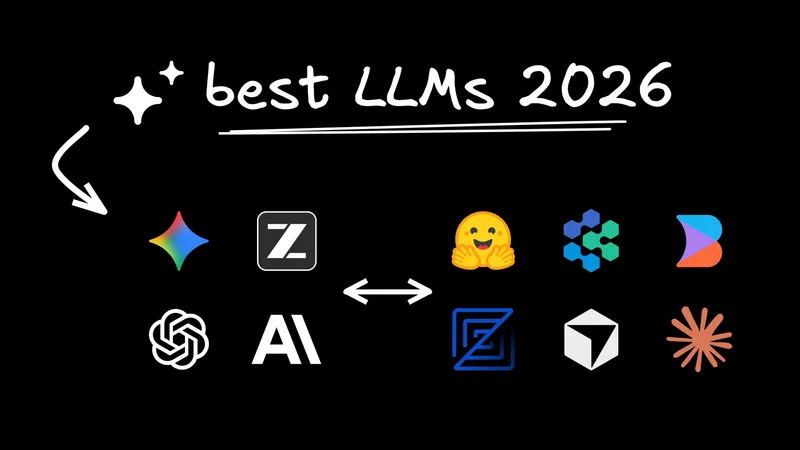
The best AI models for coding
Let’s start with a rundown of the best AI models and then move on to the best AI products:
| What you're doing | Best Default | Runner-up | Why this wins |
Fast/cheap “runner” (Q&A, small edits, constant queries) | Claude Haiku 4.5 | Gemini 3.1 Flash | You’ll hit this 30–100 times/day. If it isn’t fast and cheap, you stop using it. |
Deep thinking (debugging, architecture, hard refactors) | Claude Opus 4.7 | GPT-5.4 | When the plan is the product, pay for depth and fewer shallow answers. |
Agentic coding (issue → patch → test loop) | Haiku 4.5 (speed loops) or Opus 4.7 (hard tasks) | Gemini 3.1 Flash (speed) / GPT-5.4 (depth) | Agentic coding is a tool loop. You either want a fast runner or a careful brain. |
UI design + UI change work | Gemini 3.1 Pro | GPT-5.4 | UI work is multi-signal. Better UI instincts plus fast verification wins. |
Open-weight / open source | GLM-4.7 | Minimax M2.1 | Open-weight wins when your runtime is strict: diffs + tests + an eval harness. |
How the leading AI models feel in 2026
Claude Haiku 4.5: the runner
Haiku is the model you keep always-on. It’s quick, low-drama, and great for the constant drip of small requests:
- explain an error
- generate a helper
- tweak a function without rewriting the world
- summarize a file and tell you the next edit
If you’re doing any tool loop at all, Haiku is the model you can afford to run repeatedly. At a cost of $1 (input) / $5 (output) per million tokens, Haiku is priced to be queried constantly
Gemini 3.1 Flash: the value sprinter
Gemini 3.1 Flash is fast and cheap with good instincts. It’s a great runner-up for high-frequency Q&A. You sometimes steer it back, but the price-performance makes it worth it. Note: Gemini Flash 3 was deprecated when Google released the Gemini 3.1 family in early 2026 — Gemini 3.1 Flash is the current replacement.
Claude Opus 4.7: the careful brain
Opus feels like it reads more and guesses less. If you need a real plan, a deep debugging path, or a risky refactor mapped safely, Opus is the “pay once, save an hour” model.
Claude Opus 4.7 (released April 2026) brings a significant jump in agentic coding performance — SWE-bench Pro jumped from 53% to 64%, CursorBench from 58% to 70%. Pricing stays at $5 / $25 per million tokens, though a new tokenizer may increase effective costs by up to 35% for the same text.
GPT-5.4: the structured power tool
GPT-5.4 (released March 5, 2026) is the current runner-up for deep work and agentic coding. It absorbs GPT-5.2 Codex’s coding capabilities into a unified model that also handles computer use, reasoning, and knowledge work — one model instead of a fragmented family.
GPT-5.4 sits at $2.50 / $15 per million tokens. GPT-5.4 Mini at ~$0.40/$1.60 is a near-frontier option at lower cost. Note: GPT-5.2 Codex is being phased out and retires in June 2026.
Gemini 3.1 Pro: UI-first instincts
UI work is multi-signal: layout, spacing, interaction, accessibility, visual intent. Gemini 3.1 Pro tends to feel better at that “UI brain” mode, especially when the product gives you fast visual verification. Note: Gemini 3 Pro was shut down in March 2026 — Gemini 3.1 Pro Preview (released February 19, 2026) is the current replacement, with a major jump in benchmark performance.
Open-weight: only as good as your wrapper
Open-weight models feel great when your runtime is strict:
- enforce diffs
- run tests automatically
- measure outcomes with a repeatable harness
Without that, open-weight feels like a downgrade. With it, open-weight can be a cheat code for cost.
The best AI products for coding in early 2026
It’s misleading to speak about AI models in a vacuum. In the real world, you’re choosing an AI stack, which can directly impact the model’s performance. And in its simplest form, an AI stack has two layers:
| What you're doing | What it is | What controls it | Quick example |
Model | The base LLM weights | Your capability ceiling (reasoning depth, coding priors, instruction-following) | Claude Opus 4.7, Gemini 3.1 Flash, GLM-4.7 |
Product | The execution layer around the model, the workflow UI, and the feedback loop | How often you reach the ceiling (context packing, tool loops, retries, output format)How you interact with the model. | Chat products like ChatGPT that optimize for explanation;IDEs like Cursor that optimize for diffs/tests;UI platforms like Builder that optimize for what renders |
A product includes a runtime that might index your repo, run tests, analyze your design system, or do other unique things. It also has an opinionated approach to how you interact with the agent: a chat UI, an IDE, a CLI, a live-rendered UI, etc.
And here’s the thing: models don’t behave the same across products.
That’s why the same model can feel amazing in one place and flaky in another. AI Model performance is coupled to your larger AI stack.
Choosing AI products for common coding workflows
| Job | Best Product | Why it wins | Second Choice |
Backend engineering (types, tests, refactors, multi-file diffs) | Cursor | The IDE loop forces reality: diffs, navigation, fast iteration. | Zed + terminal agents if you like a fast hands workflow. |
Frontend engineering (UI correctness, design systems, visual review) | “Done” includes what renders. Visual verification reduces cleanup and design drift. | Cursor for small, easily verifiable UI changes. | |
Deep thinking and planning | ChatGPT UI | Lowest-friction space for reasoning, explaining, and step-by-step plans. | ChatGPT via OpenCode or Claude CLI when you want focus in the terminal. |
Agentic issue → PR loops | Devin | Autonomy + persistence for longer tasks. | Terminal agent for hands-on, auditable loops. |
Open-weight + cost control | Terminal agent | You control routing, policies, costs, and evaluation. | Zed if you want editor comfort. |
How the leading AI products feel in 2026
If you’re a frontend team, remember: The gold standard for UI work isn’t “code quality”. It’s “render quality.” Builder wins because it makes render correctness part of the loop.
Models get attention, but products decide whether you actually ship. The same model behaves differently depending on the product: the context available, how edits are applied, and how verification occurs.
ChatGPT UI: the thinking room
ChatGPT feels best when you’re still figuring out what to do.
- Great for long-form reasoning and architecture planning.
- Easy to stay in a thread and keep momentum.
- Weak at “prove it shipped”: it won’t naturally enforce diffs or run your tests.
Best when: the output you want is a plan, an explanation, or a decision.
Cursor: repo-native execution
Cursor feels like the default backend product because it lives where your code lives.
- Repo understanding is strong because the product has an indexed view of your codebase, so you spend fewer tokens re-describing the repo and more tokens on reasoning.
- The workflow is naturally ask → jump to file → edit → diff → run → iterate.
- Cursor’s “ask mode” turns it into a chat UI-style product, which is nice.
- “Done” is legible: reviewable diffs and test loops are part of the normal flow.
Best when: backend engineering, multi-file edits, refactors, anything where correctness lives in types + tests.
Zed: fast hands, sharp edges
Zed feels like speed and control.
- Great for staying in flow and editing quickly.
- Pairs well with a terminal agent: keep the editor minimal, do search/tests/scripts in the CLI.
- Also has an “Ask” mode that feels nice.
- You build more of the loop yourself, which is great for power users.
Best when: backend-focused work if you prefer a lightweight editor and you’re comfortable driving verification manually.
Terminal agents (OpenCode / Claude CLI ): the power rig
Terminal agents feel like the most “real” agentic coding because the loop is explicit.
- Search the repo with precise commands, run tests, inspect logs, and iterate fast.
- Control behavior and cost: choose models per step, enforce diff output, stop runaway loops.
- Best place for open-weight and cost control because routing and evaluation live naturally in scripts.
Best when: agentic issue→patch loops, automation, open-weight experiments, workflows where you care about control and auditability.
Devin: delegation mode
Devin feels like handing work off rather than pair-programming.
- Great for long-horizon tasks: explore, implement, test, iterate, keep going.
- Trade tight steering for persistence: you check in periodically instead of driving every step.
- Needs supervision: checkpoints and review prevent big diffs and cleanup debt.
Best when: bigger tasks where constant back-and-forth would be worse than occasional supervision.
Builder: Frontend shipping mode
Builder feels like a different category because it treats UI as the product.
- “Done” isn’t “the code compiles.” It’s “the UI is correct.”
- Visual verification makes it easier to catch “almost right” changes early.
- Design-system grounding reduces drift: spacing, tokens, and component intent stay aligned.
- Review improves because verification is anchored to what is rendered, not just what someone said changed.
- Strong automatic PR shipping and a good arsenal of background agents: Jira, Linear, Slack, etc.
Best when: frontend engineering, design-system work, UI regressions, anything where the real risk is visual drift.
A simple way to choose in 30 seconds
The best stacks win on boring mechanics: better context, tighter loops, stricter outputs, and faster verification
Here’s a simple way to pick your ideal AI stack for coding in 2026
- Pick the product based on what “done” means:
- Backend correctness → Cursor (or Zed + terminal)
- Frontend correctness → Builder
- Long-horizon agent work → Devin
- Cost control + open-weight → terminal agents
- Planning → ChatGPT UI
- Pick the model role:
- Fast loop → Haiku (runner-up Gemini 3.1 Flash)
- Deep reasoning → Opus (runner-up GPT-5.4)
- UI design/UI work → Gemini 3.1 Pro (runner-up GPT-5.4)
That’s it. Start there and modify as needed.
Closing take
The best LLM for coding in 2026 isn’t a model. It’s a stack.
Pick the product that matches your definition of “done.”
Pick the runtime that gives you tight loops and strict outputs.
Pick the model that fits the role.
Frequently Asked Questions
What is the best LLM for coding in 2026?
The best LLM for coding in 2026 depends on the task. Claude Haiku 4.5 is the top choice for fast, high-frequency work like Q&A and small edits. Claude Opus 4.7 is best for deep reasoning, architecture planning, and complex debugging. Gemini 3.1 Pro leads for UI-focused coding. No single model wins across every use case — the right pick is the one that fits your workflow and the product you're running it in.
Which AI model is best for everyday coding tasks?
Claude Haiku 4.5 is the best AI model for everyday coding tasks. It's fast, low-cost at $1/$5 per million tokens, and reliable enough to keep always-on. Use it for explaining errors, generating helpers, tweaking functions, and anything you'd query 30–100 times a day. Gemini 3.1 Flash is a strong runner-up if you want to push cost even lower.
Is Claude better than ChatGPT for coding?
For most coding tasks, Claude is the better choice. Claude Opus 4.7 handles deep reasoning, careful refactors, and long-context work well — and at $5/$25 per million tokens, it remains competitive with GPT-5.4 ($2.50/$15). Claude Opus 4.7 also brings a step-change in agentic coding (SWE-bench Pro: 53% → 64%), and Haiku 4.5 beats GPT on cost for high-frequency use. ChatGPT's UI is still the best environment for freeform planning and architecture conversations, but model-for-model, Claude leads on coding performance.
What's the difference between an AI coding model and an AI coding product?
An AI coding model is the base LLM — it determines your ceiling for reasoning quality, code correctness, and instruction-following. An AI coding product is the execution layer built around the model: the IDE, the context packing, the tool loops, and how output gets verified. The same model behaves differently depending on the product. Cursor optimizes for diffs and tests. Builder optimizes for what actually renders. ChatGPT optimizes for explanation. Choosing the right product is as important as choosing the right model.
What is the best AI coding tool for frontend developers?
Builder is the best AI coding tool for frontend developers. It treats render correctness as the definition of "done" — not just whether the code compiles — which reduces visual drift and design system misalignment. Live visual verification catches problems earlier in the loop. Cursor is a reliable second choice for smaller, easily verifiable UI changes.
What is the best AI coding tool for backend developers?
Cursor is the best AI coding tool for backend developers. It indexes your repo, enforces reviewable diffs, and makes the ask → edit → test → iterate loop feel native. Zed paired with a terminal agent is a strong alternative for developers who want a lighter editor and more direct control over verification.
What are open-source or open-weight LLMs good for in coding?
Open-weight LLMs like GLM-4.7 and Minimax M2.1 are best for coding workflows where you control the runtime: enforced diff output, automated test runs, and a repeatable evaluation harness. In that environment, they're a strong cost advantage. Without that structure, they underperform compared to frontier models. Terminal agents are the best product pairing because they let you control routing, model selection, and evaluation directly.
What is agentic coding and which AI model is best for it?
Agentic coding is a workflow where an AI model runs a loop — reading the codebase, writing a patch, running tests, and iterating — with minimal human input per step. For fast agentic loops, Claude Haiku 4.5 is the best model because it's cheap enough to run repeatedly. For harder tasks where reasoning quality matters more than speed, Claude Opus 4.7 is the better pick — its April 2026 release brought a major jump in agentic coding benchmarks. Devin is the best product for long-horizon agentic tasks where you want to delegate and check in, rather than drive every step.