5 Questions to Ask Before Implementing an Agentic Development Platform
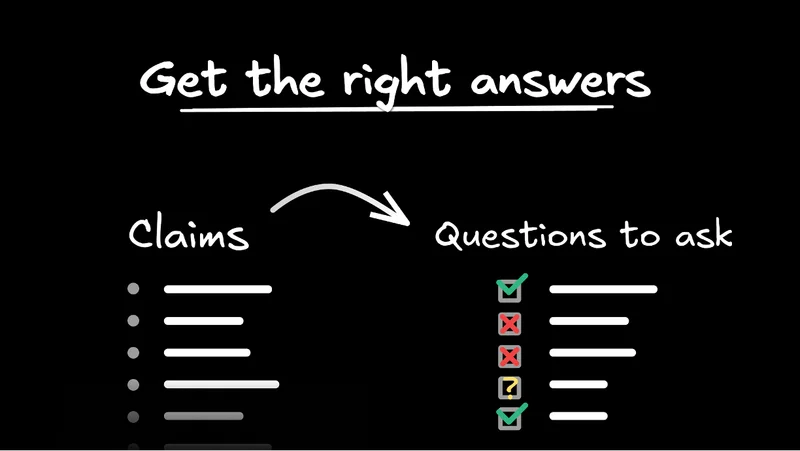
Before you bring on an agentic development platform, run the vendor through these five questions that reveal how the tool holds up in real workflows.
Most platform purchases look fine on the demo and fall apart six months in. The tool worked. The integration shipped. Adoption stalled because the platform solved a problem the team did not actually have, or solved it in a way that created two new ones nobody saw coming.
Better evaluation questions can prevent most of this. Vendors will steer you toward feature questions, which are convenient for them and useless for you. The questions that matter are the ones that surface how a platform behaves once it touches your real workflow, your real codebase, and the people who have to live with it for the next three years.
Here are five questions to run every vendor through before you sign anything.
1. Does the platform reduce your handoffs, or just rename them?
Every agentic development platform claims to cover the full lifecycle, but none really do. There is always a seam, usually more than one, where work has to leave the platform and go somewhere else. That seam is where projects die.
Ask the vendor to walk you through a real customer's workflow from idea to production. Skip the slide and ask for the actual sequence:
- Where does design happen, and how does it get into code?
- Where does code get written, and by whom?
- Where does QA loop back when something breaks?
- Where does a copy change made by marketing end up in the repo?
If the answer involves three different tools talking to each other through a Zapier-style connector, what you are buying is a coordination problem with a logo on it. The handoffs you have today will still exist under different names, and the team that owned them before will still own them after. This is the backlog problem AI didn't solve, and most platforms make it worse by adding another tool to the chain.
The platforms to take seriously have a clear answer about what they own end-to-end and an equally clear answer about where their tool stops. A vendor who claims to own everything is bluffing. A vendor who can show you exactly where the handoff happens and how it works deserves more of your time.
2. Does the user reaction match the buyer enthusiasm?
Buyers and users are different people. The buyer is usually a VP or director who sat through the polished demo with the sales engineer. The user is a frontend developer, a designer, or a PM who will open this tool 15 times a day for the next 2 years, and their reaction is what determines whether this purchase works.
Get the user in front of the platform before you buy. Skip the guided walkthrough and sit them down with a real task from their backlog. Watch what happens when they try to do it. A few things to pay attention to:
- Where do they get stuck on the third or fourth thing they try, rather than the polished happy path the vendor showed you?
- How does it feel when they have to fix a mistake, because most platforms are great at the create flow and clumsy at the edit flow?
- Do they want to keep using it after thirty minutes, or are they quietly reaching for the tool they already know?
If your frontend engineers shrug and say it is fine, treat that as a failure signal. Engineers get opinionated about the tools they want to use. The absence of an opinion usually means the answer is no. The platforms that survive are the ones built when agents work for the whole team, not just the developer who runs the demo.
3. Will the platform work with the codebase we actually have?
Vendor demos run on clean, simple codebases that the platform was designed around. Your codebase has six years of accumulated decisions, two competing component libraries, a half-finished design system migration, and a directory called legacy_DO_NOT_TOUCH that has been touched many times.
Ask for a proof of concept of your code. Pick a real project that includes the messy parts:
- A page with conditional rendering
- A form with custom validation
- A component that pulls from three different state sources
What you are looking for is whether the platform respects what you already have or tries to replace it. Some platforms are happy to read your existing components, work within your conventions, and produce output that looks like the rest of your code. Others want to generate everything from scratch, which means everything they produce will feel like a foreign object that someone has to manually rewrite to match the house style. The first kind of compound grows in value over time. The second kind generates work you have to undo.
A platform built on agent-native architecture handles this better than one with AI bolted onto an older foundation.

Pay attention to what happens when the platform gets something wrong. Can a developer open the generated code, fix it directly, and have those fixes persist? Or does the next round-trip overwrite their work? A tool that cannot be corrected by its users will be abandoned within a quarter, no matter how good the initial output looks.
4. How does the platform fail, and who catches it?
Every AI-powered platform is wrong sometimes. The interesting question is what happens when it is.
Good failure modes are loud, easy to spot, and easy to fix. The tool produces something obviously broken; a developer notices it in 5 seconds, and the fix takes a minute. Bad failure modes are quiet. The tool produces something that looks correct but is subtly wrong, ships to staging, and gets caught by QA two days later. Worst case, it gets caught by a customer. This is how agent productivity creates a quality debt that compounds faster than teams realize.
Ask the vendor how they think about quality and what guardrails the platform has:
- How does the platform handle ambiguous instructions?
- What does it do when it does not know the answer?
- How does a team review and approve output before it ships?
You also want to know what happens at scale. A platform that produces decent output for one component might produce inconsistent output across fifty. Ask to see what a real customer's repo looks like after six months of using the tool. Is it cohesive, or does it look like seventeen different developers with different styles all worked on it?
The boring answer here is governance, and boring is what you want. A platform that has thought hard about how teams maintain quality over time will hold up at team scale, where a platform that demos beautifully on a single screen will not.
5. What does pricing look like at the scale we actually want to reach?
Most platforms are priced to make the entry point feel reasonable. Per-seat pricing for the first ten users looks fine. Then you try to roll it out to forty people, and the math changes.
Run the numbers for the scale you actually want to reach, not the pilot:
- How many seats do you need in year two if this platform works?
- What does that cost?
- Are there usage-based components that scale with the volume of your team's builds, such as per-generation, per-build, or per-deployment?
Those usage-based costs are easy to ignore during a pilot with three users, but painful once a team of forty is using the tool every day. Ask what happens when you exceed limits. Does the tool degrade gracefully or stop working entirely? Is there a meaningful conversation to have with the vendor about pricing at your scale, or are you stuck with whatever they put on the website?
Then ask about the second-order costs:
- How much engineering time is required to integrate?
- How much ongoing maintenance?
- How much training for new hires?
A platform that costs $20 per seat but requires a dedicated platform engineer to maintain ends up costing more than a $100-per-seat tool that runs itself. The cheapest tool on paper often turns out to be the most expensive one in practice. The number that matters is the total cost of getting real value out of this, sustained over three years.
The platforms most teams actually need
Run these five questions against the current market, and most agentic development platforms will fail at least two of them. They own a narrow slice of the workflow while claiming to own more. They demo well and feel clunky in daily use. They work on greenfield projects and struggle with real codebases. They fail quietly. They get expensive at scale.
The platforms that survive this kind of evaluation share a few traits. They are honest about where they fit in the workflow. They produce code that respects what teams already have. They give developers a way to correct mistakes that stick. They have thought about governance before you asked. Their pricing makes sense at the scale where the platform actually has to work.

Builder.io was built for teams that hit these questions hard. It owns the path from design and prototype to production code that lives in your repo, your component library, and your conventions. Developers can edit the output directly and have their changes persist. Marketing and design can make changes to live pages without filing a ticket. The platform was built to work inside existing engineering systems, so the code it produces feels like code your team would have written.
If you are evaluating agentic development platforms now, run these five questions against every vendor on your list, including us.
For a deeper look at how this works end-to-end, see the idea-to-production workflow.
Try Builder on your codebase with the work you actually have to ship. Get started for free, or speak with a Builder expert.