10 Best AI Agent Frameworks in 2026
Agent use nearly doubled in 2026, according to a survey by Notion, Amplify and Vercel. Among respondents using agents, 90% now let them write data, up from 52% the year before.
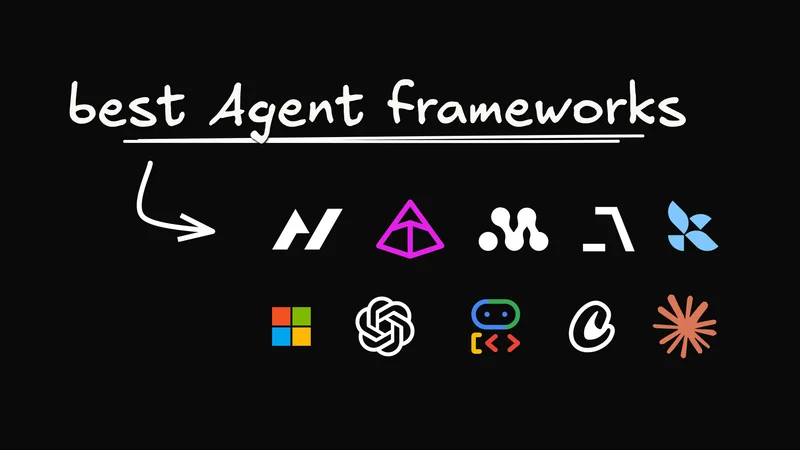
If you're ready to build, which framework should you start with? Some help you create agents whose work people can see and edit in an app. Others focus on coordinating workflows, running specialist agents or working with files and code.
AI agent frameworks at a glance
| Framework | Best for | Languages | Open source | Interface options | Deployment options |
|---|---|---|---|---|---|
Agent-Native | Agents people guide and edit through an app | TypeScript | Yes (MIT) | The app itself, for end users | Self-host, or build online with Builder.io |
LangGraph | Workflows that pause for approval and resume | Python, TypeScript | Yes (MIT) | Studio (developers), Agent Chat UI (separate app) | Self-host or LangSmith Deployment |
Mastra | Agent backends with built-in evals | TypeScript | Core only (Apache-2.0) | Studio (developers and operators) | Self-host or Mastra Platform |
OpenAI Agents SDK | Tool-using assistants and voice agents | Python, TypeScript | Yes (MIT) | None | Self-host |
Claude Agent SDK | Agents that edit files and run commands | Python, TypeScript | No (Commercial Terms) | None | Self-host |
Google ADK | Gemini agents deployed on Google Cloud | Python, TypeScript, Go, Java, Kotlin | Yes (Apache-2.0) | ADK Web (developers) | Self-host or Google Cloud |
Microsoft Agent Framework | Agent workflows inside .NET and Azure systems | Python, .NET, Go (preview) | Yes (MIT) | DevUI (developers) | Self-host or Microsoft Foundry |
CrewAI | Jobs split among specialist agents | Python | Yes (MIT) | Studio editor (CrewAI AMP) | Self-host or CrewAI AMP |
Pydantic AI | Agents whose output feeds other code | Python | Yes (MIT) | Command line and web chat | Self-host |
Agno | Agents served as an API to other apps | Python | Yes (Apache-2.0) | Control plane (separate) | Self-hosted AgentOS |
What is an AI agent framework?
An AI agent framework gives developers the building blocks to create agents that use language models to carry out tasks. It manages the cycle of calling a model, running the tools it requests and returning the results so the agent can decide what to do next.
A support agent could look up an order, check the refund policy and prepare a response. You define the tools and business rules; the framework coordinates their execution. Depending on the framework, you also get features such as memory, human approvals and tracing to inspect what happened.
How to choose an AI agent framework
- How will people work with the agent? Agent-Native is a strong option for work people review and edit in an app; Agno suits Python agents called by other services, while Mastra suits a TypeScript backend behind an existing interface.
- What happens when it gets something wrong? LangGraph supports checkpoints and approval steps, Claude Agent SDK lets you set permissions for files and commands, and Pydantic AI validates output structure before your code uses it.
- Which programming language does your team use? Agent-Native and Mastra are good options for TypeScript, CrewAI suits role-based agents in Python, and Microsoft Agent Framework supports .NET.
An open-source framework doesn't make the models it uses free or open source. You may still pay for model API calls and hosting. Running a model locally changes those costs, but you still need the hardware to run it.
The 10 best AI agent frameworks
Sources: each project's documentation and repository, reviewed in November 2026.
1. Agent-Native: AI agents with the interface of an app

Agent-Native is an open-source TypeScript framework for building agentic apps, where the agent and its React user interface use the same actions and data.
For example, in Agent-Native Design, you can ask the agent for a landing page and choose from the design directions it offers when your request is open-ended. Adjust the spacing on the canvas, pin a comment to the hero button and send it to the agent to revise that button.
Key features:
- Your edits and the agent's land in the same data, so the agent picks up from what you changed instead of starting over.
- The agent knows what's on screen, such as the selected element or open record, so "make this bolder" is enough.
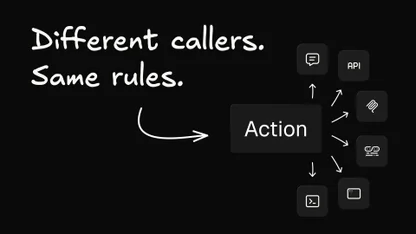
- Define a capability once, and it automatically works across the agent, UI, API, MCP, A2A and command line, without separate implementations.
- Sign-in, permissions, memory, automations and agent teams ship with the framework.
Tradeoffs:
- Agent-Native is in beta, so plan for API changes between releases.
- Only supports TypeScript.
Verdict: the pick for TypeScript teams building agents whose work people can review, edit and share in a familiar user interface.
Start locally with the Agent-Native docs:
Or build online with Builder.io, which hosts the app with the database, sign-in and AI models already set up.
2. LangGraph: durable workflows that pause for a person

LangGraph, from the LangChain team, has you draw the agent as a graph of steps and state. A refund workflow can have nodes for research, a proposed action and a manager's approval, with the run waiting at the approval node until someone signs off. LangChain's own agents run on LangGraph, and you can use it on its own.
Key features:
- With persistence configured, checkpoints save each step, so a failed or paused run resumes where it stopped.
- Interrupts let a run wait for a person's input, then continue.
- Deterministic code and model-driven steps share one graph, so the approval points are explicit.
- Python and TypeScript editions let a mixed team share one approach.
Tradeoffs:
- Designing the graph, its state and its recovery is your team's job, which is extra work on a small project.
- Studio, its debugger, runs through LangSmith, LangChain's platform.
Verdict: strong for audited, multi-step workflows where a person signs off, if your team is happy to own the graph.
See the LangGraph docs.
3. Mastra: a full TypeScript agent backend

Mastra bundles agents, workflows, memory, tracing and evals into one TypeScript dependency. A support assistant built on it can look up an account, draft a reply and hand unresolved cases to a person. Its evals then score the replies against criteria you choose, before and after a prompt change.
Key features:
- Evals, tests that score an agent's answers, are built in, so the team can check changes before they ship.
- One model router reaches more than 220 providers, local ones included.
- Studio can be deployed for the team, so operators can watch agents in production.
Tradeoffs:
- Studio serves your developers and operators. Your end users still need an interface you build.
- Only supports TypeScript.
Verdict: a strong all-in-one backend for a TypeScript team that will build its own front end.
Read the Mastra docs.
4. OpenAI Agents SDK: lightweight agents on OpenAI, voice included
The OpenAI Agents SDK is OpenAI's own agent framework, built around three core concepts: agents, handoffs and guardrails. A front-desk assistant can answer routine requests, call a service to look things up and hand billing questions to a specialist agent.
Key features:
- A new developer has only those few concepts to learn.
- It builds voice and realtime agents as well as text ones.
- Every run is traced by default, so you can follow each handoff and tool call.
Tradeoffs:
- Guardrails need deliberate setup: input checks can run alongside the agent, and output checks run after it, so they don't stop every unwanted action before it happens.
- OpenAI is the default. Other providers run through compatible endpoints or custom integrations, and traces go to OpenAI unless you turn that off.
- It hasn't reached 1.0, and you run it on your own servers.
Verdict: choose it for an assistant on OpenAI models that needs tool calls, handoffs or voice.
See the Agents SDK docs.
5. Claude Agent SDK: Claude Code's agent inside your product

The Claude Agent SDK puts the agent behind Claude Code into your own product, along with its tools. Point it at a repository and it can read the code, change the files that matter and run the project's checks. It's also the only framework on this list under a commercial license rather than an open source one.
Key features:
- File editing, shell commands and web search come built in, so there's less tool code for your team to write and maintain.
- Permission rules and hooks limit what the agent may touch.
- Sessions, skills and subagents split longer work into focused pieces.
- Claude is available through Amazon Bedrock, Google Cloud and Microsoft Foundry as well as Anthropic's API.
Tradeoffs:
- It runs Claude models only, and it hasn't reached 1.0.
- You run the environment it works in, and you decide which files, commands and credentials it can reach.
- Use falls under Anthropic's Commercial Terms, even though the Python package's source is MIT.
Verdict: a strong start for agents that work on files and code, if your team is on Claude.
Read the Agent SDK overview.
6. Google ADK: multi-language agents for Google Cloud

Google's Agent Development Kit (ADK) is the only framework here in five languages, so teams across an organization can each work in their own. It's tuned for Gemini and gives you a documented route from a local agent to a Google Cloud deployment.
Key features:
- Python, TypeScript, Go, Java and Kotlin editions.
- ADK Web runs and inspects agents during development.
- Workflow agents, graphs and evaluation tools are part of the kit, plus experimental A2A support in Python, Go and Java.
- Claude and OpenAI models work alongside Gemini, with support that varies by language.
Tradeoffs:
- Managed hosting means Google Cloud. Anywhere else, your team runs its own container.
- Features differ between the language editions. Local models, for one, work only in Python.
Verdict: the natural pick for a team on Google Cloud that writes more than one language.
Start from adk.dev.
7. Microsoft Agent Framework: enterprise workflows on Azure and .NET
Microsoft built Agent Framework to take over from AutoGen and Semantic Kernel, and the same teams work on it. An internal purchase workflow can collect details and check business rules in code, use the model for judgment calls and ask a manager to approve the last step. Version 1.0 shipped with a long-term support commitment.
Key features:
- Migration guides from AutoGen and Semantic Kernel give existing code a path forward.
- Graph workflows cover sequential, concurrent, handoff and group patterns, with checkpoints and approval steps.
- Models come from Foundry, Azure OpenAI, OpenAI and Anthropic, plus local models through Ollama.
Tradeoffs:
- There's no TypeScript edition. It comes in Python and .NET, and the Go preview is missing some features.
Verdict: the natural fit for .NET and Azure teams, and for teams migrating from AutoGen.
See the Agent Framework overview.
8. CrewAI: crews of specialist agents

CrewAI has you describe a crew: agents with roles, and the tasks they share. A research brief might split into one agent that gathers sources, one that checks claims and one that writes. Flows then decide when each task runs and what happens next.
Key features:
- Roles and tasks replace hand-wired handoffs, so people who didn't build a crew can still read what each agent does.
- Flows add state, conditions and control over how the larger process moves.
- Several model providers work, through native SDKs, LiteLLM or OpenAI-compatible endpoints.
Tradeoffs:
- Every extra agent adds model calls and coordination, so split a job only where the roles need different tools or instructions.
- It's Python only, and the visual Studio editor comes with CrewAI AMP, the company's commercial platform.
Verdict: a good fit when the job maps to a team of specialists and your team writes Python.
Read the CrewAI docs.
9. Pydantic AI: type-safe agent output in Python

Pydantic AI comes from the team behind Pydantic, and it validates agent output the way Pydantic validates data. An agent that triages incoming requests can return a category, a priority and a reason, and your routing code gets exactly those fields, or the run fails.
Key features:
- Output is checked against types you define, and the model is asked to retry, up to a limit you set, when it doesn't match.
- Durable runs work with engines your team may already operate, such as Temporal, DBOS and Prefect.
- It supports several model providers, local ones included, and its OpenTelemetry tracing works with the observability tool you already use.
Tradeoffs:
- A valid shape isn't a correct answer, so your tests still need to check the agent's decisions.
- It's Python only.
Verdict: the pick when an agent's output feeds other code.
See the Pydantic AI docs.
10. Agno: Python agents served as an API

Agno pairs a Python agent framework with AgentOS, a FastAPI runtime that serves agents, teams and workflows to other apps. Your front end sends a task, and the service keeps the session, the stored state and any approval steps on infrastructure you choose.
Key features:
- Agents, teams and workflows come with REST endpoints, so other services call them like any API.
- Sessions, stored state and approvals are handled by the runtime.
- It supports several model providers, under an Apache-2.0 license.
Tradeoffs:
- You run the runtime and its database yourself, and background jobs or several replicas need extra configuration.
- The control plane for managing the runtime is a separate interface from the framework.
Verdict: the pick when other apps need to call your Python agent as a service.
Explore the AgentOS docs.
Test your shortlist on one real task
Once you're down to two or three frameworks, give each one a real task from your project. Make it include a tool call that fails, a person correcting the agent and the final output your app needs. Check how each framework recovers, uses the correction and returns the result.
Questions
Which AI agent frameworks work with TypeScript?
Agent-Native and Mastra are built for TypeScript. LangGraph, the OpenAI Agents SDK, the Claude Agent SDK and Google ADK all have TypeScript editions alongside Python.
Which AI agent framework is best for Python?
LangGraph for long workflows with sign-off, CrewAI for role-based crews, Pydantic AI when output must match a type and Agno for agents served as an API. Microsoft Agent Framework, Google ADK and the OpenAI and Claude SDKs also support Python.
Can I switch models after choosing a framework?
Usually, since most frameworks here support several providers. Features like tool calling, structured output and voice can still behave differently from one model to the next, so test with the model you plan to use. The Claude Agent SDK runs Claude only.
Which AI agent frameworks are open source?
All but the Claude Agent SDK, whose use falls under Anthropic's Commercial Terms. Mastra keeps its enterprise features under a separate license, and the rest use MIT or Apache-2.0.