What Agent Native Means for the Whole Team
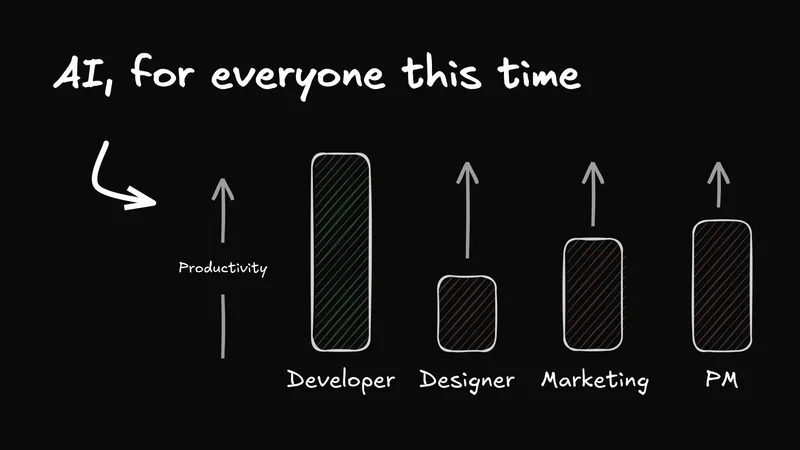
Why does AI seem to help developers way more than it helps anyone else?
If you're a developer, you can point an agent at a repository and tell it to fix a bug. The agent reads the code, modifies a few files, runs your test suite, and opens a pull request. You review exactly what changed, drop a comment, and let it run another pass. It's far from perfect, but it's clearly doing real work.
Now watch a marketer, product manager, or designer use AI. The models are just as capable, but the experience is wildly different: the AI produces something, but the person still has to carry the context around and turn the output into something usable.
It's easy to blame this on technical literacy, as if engineers are simply better at prompting or code is uniquely suited to AI.
But the real difference isn't who uses AI better. It's whether the AI can work inside a shared system, or whether a person has to constantly carry the context and outputs back and forth.
Why AI still feels like extra work
For most teams, AI still sits beside the work instead of inside it. It can draft an email, summarize a customer call, or suggest a campaign. But it doesn't know which document is current, which claims legal approved, who this version is for, or where the finished work needs to go.
That context rarely lives in one place. A marketing campaign might be split across a CMS, a spreadsheet, an analytics dashboard, a Slack thread, and the memories of the people who know why legal rejected the first draft. Product and design work is similarly scattered across customer calls, tickets, Figma, and the running app. AI can help with each piece, but it can't see how they fit together or how a change in one should affect the others.

New standards like MCP are starting to give AI access to more of these tools. But access alone doesn't turn a collection of tools into a workflow. Opening the CMS doesn't tell an agent which claim legal approved, which audience the page is for, or who needs to review the change.
So the person using the AI has to stitch the process together by hand. They paste in the brand guidelines, upload the analytics screenshot, explain that the pricing page is out of date, and carry the draft into the CMS. When it breaks the layout, they carry it back to the chat and explain the design constraints.
Because that process lives in one person's head and chat history, the team can't inspect it, improve it, or reliably reuse it. A great prompt can be useful. But what the team really needs is a workflow it can keep.
Code already had a place for agents to work
Software development already has exactly that: a shared workflow for making changes. Code lives in files everyone can inspect. Each change is visible, tested, and reviewed before it ships. Experiments happen safely, and if something goes wrong, the team can see what happened and roll it back.
We didn't create this way of working for AI. We created it so people could work in parallel, make mistakes, and recover without wrecking one another's work. It turns out agents need the same things: room to try, a record of what they did, and a human checkpoint before anything goes live.
Tools like Codex, Cursor, and Claude Code can step directly into that process. They edit the real files, show exactly what changed, open a working version you can test, and submit the result for review.
That's why coding agents feel like assistants instead of high-maintenance pen pals. They can do the work, show their work, and let a person decide whether it ships.
The app is where the work happens
So what would it take to give everyone else the same advantage developers have had? The agent has to move out of the chat window and into the work itself.
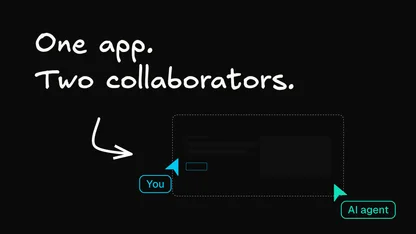
That's the basic idea behind agent-native software: the agent comes with a real app. Not a chat window with the work hidden somewhere behind it, but an actual place where the campaign, page, product spec, or customer record lives. The agent works on the real thing there, using the context that belongs to it, and leaves its changes where a person can review them.

You can still talk to that agent from Slack, ChatGPT, another app, or an API. But the work lands in the app, where the team can see what changed, test it, and improve how the agent works.
From generated copy to a working page
Think about creating three variations of a landing page for different audiences.
In a chat-first setup, AI can write three versions of the copy, but the output is still just text. A marketer has to move it into the page builder, map it to the right components, check it against current brand guidelines, set up the audience targeting, and send each version out for approval.
In an agent-native system, the agent creates the variations in the actual page. It works within the approved components and product claims, applies the right audience to each version, and puts the changes into review. The marketer can review the rendered pages instead of trying to imagine them from generated copy.
With the real thing in front of you, you can actually apply your taste. A headline can read well in a doc and fall flat in the layout. An onboarding flow can sound perfectly sensible on paper until you click through it and spot the missing step.
The team gets to keep what it learns
Let's go back to those landing page variations. Say the enterprise version keeps leading with speed, but the marketer knows those customers care more about control.
In a chat workflow, they fix the headline and move on. The lesson stays in that page, or maybe in their chat history.
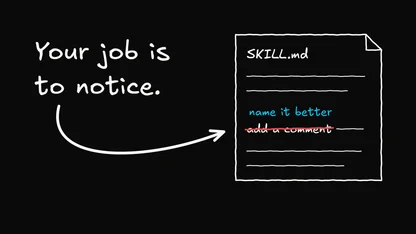
In an agent-native workflow, they can also fix the process that produced the page: what the agent knows about the audience, which claims it can make, what kind of page it builds, and who needs to sign off. The next enterprise campaign starts from that improved workflow instead of forcing someone else to rediscover the same lesson.
That guidance lives with the app itself, alongside the sources it can use and the approvals it needs. When the audience changes or legal tightens a claim, the marketer updates it once, and the next page starts from the new rule.
This works the same way it does for code: the agent proposes the change, you try it in the real app, and nothing becomes part of the shared workflow until someone approves it.

Once improvements live in the workflow, they can spread across the whole team. A positioning update can flow through active marketing campaigns without someone explaining it to six different tools. Customer feedback can stay with the work as it turns into a product spec and then a prototype. A sales tactic that works for one rep can become a shared team asset instead of a secret prompt passed between two people.
None of this means the marketer has to become a programmer. It means the people who understand the work can shape the software they use to do it.
The goal is less tinkering, not more
There's a growing idea that every role should absorb a second AI role: marketers should become prompt engineers, PMs should become prototype builders, and everyone should learn to evaluate models and wire tools together.
But that’s just an unpaid second job.
The better path is to start with software that already works, then shape it as you go. We've built a growing set of apps this way, and we use and improve them internally at Builder every day. We share those same maintained apps in the Agent Native gallery so other teams can use them and shape them around their own work. Content, Slides, Analytics, and Forms all start with familiar work instead of a blank chat box. Each app in the gallery runs on Builder. You sign in with Google, and Builder saves your work and handles the database and AI setup behind the scenes.
You still have to be willing to improve the way you work while doing the work. But now, instead of manually rebuilding the setup, you should be able to ask the agent to change the shared workflow, try the result in the real app, and have that improvement become part of the software everyone uses.
The software fits the team. The team doesn't have to fit the software.
Change the workflow without going off the rails
But how can software fit the people using it without becoming a private setup that nobody else can understand or trust? Right now there are three common ways to get software for your work, and each one gives up something.
Generic AI tools are flexible, but the setup lives in one person's prompts and personal tools. It may work beautifully for them while nobody else can see how, check it, or reuse it.
Custom internal software is shared and governable, but every improvement waits in line on the engineering roadmap. The workflow gets better at the speed of the backlog.
Traditional SaaS is shared and predictable, but rigid: your workflow stops wherever the settings panel ends. Even when the vendor adds AI, it's often hard to tell what that AI can actually see. It can sound certain while missing the document, customer history, or rule you assumed it knew.

Agent Native keeps what each of these gets right. People work through a shared app, and the agent can carry work forward instead of merely suggesting the next click. The workflow can change, but those changes happen where the team can see, review, and correct them.
Engineers still define the boundaries. They decide what the agent can touch, which actions require approval, and what’s off-limits. They also make sure the relevant sources and permissions are part of the workflow, rather than left to someone's memory or buried in a private prompt.
Within those boundaries, the people closest to the work can shape how it gets done. They know where context disappears, which judgment calls matter, and where the process keeps breaking down. A marketer shouldn't need to file an engineering ticket just to tell the system that enterprise buyers care more about control than speed. Marketing should be able to change that guidance, while engineering still controls what the system can access and do.
The guardrails live inside the app itself. The agent uses the same approved data, actions, permissions, and review steps as the rest of the product instead of getting a separate path around the rules. Sensitive actions can require approval, every change can leave a record, and mistakes can be reviewed or reversed.
That means someone can improve the workflow without hiding those changes from the rest of the team, and a useful personal adjustment can become something everyone can trust and keep.
Build durable workflows even as work keeps changing
Being agent-native isn't about removing the humans who understand the business. We're the ones who know what's true, what feels off, what the customer actually cares about, and when a technically correct answer is still a bad result. We aren't the bottleneck in the system. We're the entire point of the system.
The models and tools underneath the workflow will keep changing. Next month will bring another agent with a fancy name, and we'll all reshuffle our benchmarks to match.
What should survive that churn is every hard-won improvement to how the team works. Prompts are disposable, but workflows should compound over time.
We just need software that lets us put what we know to work.
Try an Agent Native app today. Choose one from the gallery and start getting real work done.