AI is finding old bugs faster than we're patching them
In 2024, a security audit of PHP came across a bug and gave it a one-line verdict: "Exploitation was not proven, hence the bug was not fixed."
Two years later, that bug has a name, PHP2Shell, and it lets a stranger take over a PHP server, WordPress sites included, without logging in. This summer, two security teams using AI models each built a working attack in a few days, and on October 17, someone was already trying it on real servers, four days before PHP's emergency fix.
A working exploit used to be the expensive part of a security bug. It took a rare expert and months of work, and that cost was quietly protecting a lot of old code. AI models have made exploits cheap, and most of our patching habits still assume the old price.
I'll start with why PHP2Shell went unfixed for years and how AI cracked it in days. Then I'll get to the part that matters even if you never write PHP: what to patch this week, from NGINX to Java, and why I'd fix the "not proven" bugs in your own tracker anyway.
What is PHP2Shell, and why did it go unfixed?
PHP2Shell is two bugs that together let a stranger run code on a PHP server without logging in. The trick is to make PHP run out of memory at exactly the wrong moment. PHP stops the request and cleans up, and the cleanup trusts memory it shouldn't. PHP's own description: out-of-memory handling "can interrupt PHP while internal request data is only partially initialized."
Calif, one of the two security firms that found the bug this summer, traced the earliest affected code to PHP 5.4 and confirmed the attack works against WordPress, Drupal, Magento and Nextcloud. Five days after the fix, CISA, the US cybersecurity agency, put both bugs on its list of flaws attackers are actually using.
People had been standing near this for a long time.
In 2004, the security researcher Stefan Esser warned that cutting PHP off at its memory limit at the wrong moment could let an attacker run code on the server. PHP fixed that one.
In November 2019, someone filed PHP bug #78876, reporting that long fields in a multipart form, the kind of request a file upload sends, could run PHP out of memory. A PHP developer replied that an allocation failure "strictly speaking is not a crash," and worried only about the temp files it left behind. It was fixed in 2020 as a way to fill up a disk, not a way to take over a server.
Then came the 2024 audit, organized by OSTIF, a nonprofit that sets up security audits of open-source projects, and carried out by the security firm Quarkslab. According to Calif, its verdict was the line I quoted at the top: "Exploitation was not proven, hence the bug was not fixed."
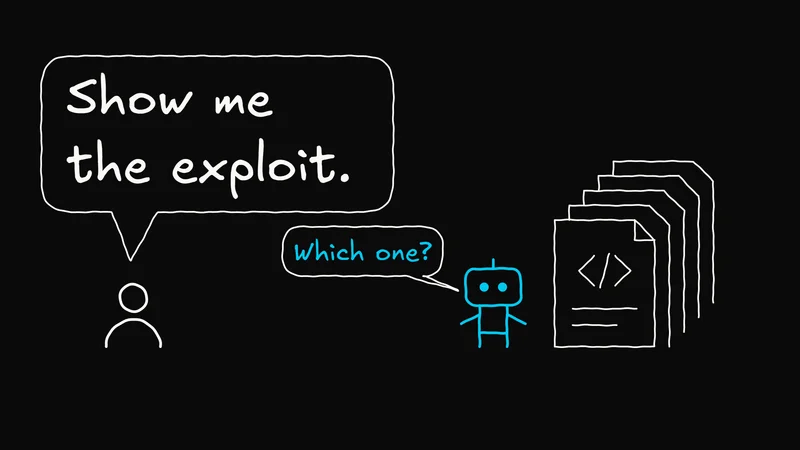
I don't read any of this as carelessness. Turning "this crashes" into "this runs my code" has taken rare skills and a lot of time, and no maintainer can spend months on every crash. "Show me the exploit" was a reasonable filter while exploits were hard to make.

How AI helped crack PHP2Shell in days and Java4Shell in hours
"Show me the exploit" stopped being a useful filter this summer, when Calif came to PHP through OpenAI's Patch the Planet initiative. Calif's Ryan Austin writes, "We were not expecting to find anything critical." The reason: "everyone and every lab had already done extensive AI assisted audits of this target."
By August 1, a few days in, the team had several routes to running its own code. Calif says "no special harness, or access to models that weren't generally available to everyone" went into the first discovery.
Wiz, a cloud security company, found the same bugs independently; its timeline says August 19. It had code running on Drupal and WordPress within two days. Wiz's summary: "With frontier AI models and the right tools, a single researcher completed in a week what previously would have taken a world-class team months of work."
Calif sent PHP a working exploit on August 14. The bug was then meant to stay under embargo, kept secret while PHP prepared a fix, until the October 21 release. But on October 17, four days before that release, Amazon's threat intelligence team saw someone trying to exploit it. Someone outside the embargo already knew about it.
Java4Shell went faster still. It's a bug in Java's Base64 decoder that can let a stranger run code in apps like Jenkins, Jira, Confluence and Keycloak. Oracle patched it on November 17.
Calif's Quang Luong found it in about an hour while auditing OpenJDK with OpenAI's Codex, then took two more hours to build the first working exploit. Calif puts the total token bill under $200. (Calif wasn't the first to see it, though: in September, an OpenJDK contributor proposed a fix for the same decoder writing past its buffer, and it was closed without being merged on November 4.)
Why AI still needs a person with a theory
Fast and cheap as those results were, the models didn't get there alone. Calif's Ryan Austin picked his target on purpose: "I focused on something I had a background in, knew its vulnerability history well, and held a theory that specific bugs lurk within the codebase."
Models, he writes, "do not reliably begin with obscure twenty-year-old exploitation primitives." In plain terms, a model won't start from an old, obscure technique unless someone points it there, the way Austin did.
So finding the first deep, old bug still takes a person with a theory. NGINX shows what happens after that. On November 18, F5 patched 10 bugs in open-source NGINX. Five of them came from the security firm Xint, which rates all five critical.
A Xint researcher found the worst of them while preparing for a hacking competition: an integer overflow that Xint says "has been present since nginx introduced HTTP/2 in 2015." Then, in Xint's words, "a few days later, a fully automated Xint scan found the other four without human guidance."
How attackers use AI to turn patches into exploits
For attackers, the patch can stand in for the person with a theory: once a fix ships, it shows them exactly where to look.
On November 16, Google's Threat Intelligence Group reported an attacker's server running a set of AI agents it calls exploit_agent. It "compares code before and after patch announcements, analyzes findings to identify potential vulnerabilities, drafts exploits, and automatically executes them without human intervention." Google says it hasn't seen the whole chain automated before.
The same report counts zero-days, flaws used in attacks before a fix exists. In 2025 the average was 8 a month. In 2026 it's 11 a month, and in August it hit 22.
That August, researchers used LLMs to build working exploits for a bug in PaperCut, a print-management app, within a day of disclosure. Attacks began four days after. PHP2Shell didn't get even that much room, since its first known attack came before the fix.

Xint has the bluntest number: "In 2025, the nginx security advisory list recorded two new vulnerabilities. By November 17 this year, it had recorded 26."
What to patch this week, starting with PHP, NGINX and Java
If a patch can become a working exploit within a day of disclosure, the stretch between a security release and your deploy is the part you control. So first, shrink that gap to days. For a JavaScript team, the risk is mostly in software nobody thinks of as theirs: the NGINX in front of the Node app, the Jenkins that runs CI, the WordPress site that marketing owns. As of November 23, 2026, that means:
- NGINX: 1.31.10.
- PHP: 8.5.13, 8.4.28, 8.3.37 or 8.2.36. PHP 8.1 and older get no new releases, so upgrade.
- Java: Oracle's November 17 patch, if you run Java 17.0.6 or later, the versions Java4Shell affects.
Finding every copy of those three that you're responsible for is a good job for a coding agent, and it's worth doing before the weekend.
Second, stop reading the caveats as exemptions. Java4Shell only works on x86-64 CPUs with a feature called AVX-512 VBMI, and only when the app passes attacker input to the decoder. PHP fixed 18 more bugs on November 19 and says the critical ones "require either non-default configuration or uncommon setups." F5 says it has seen no exploitation of the NGINX bugs yet.
All true, and all easy to read the way that 2024 line reads: as a reason the bad case probably isn't yours. But working out whether your setup is the uncommon one is the kind of analysis that just got cheap, for you and for anyone scanning you. I'd patch first and look up my CPU features afterward.
I wouldn't count on Docker to limit the damage, either. Xint found a Linux kernel bug that chains with any of its NGINX bugs to escape the container and get root on the host.
Why you should ask for the exploit before attackers do
Somewhere in your tracker is a bug that was closed, or left open for years, with your team's version of the 2024 line: it crashes, but nobody could show it mattered. That used to be a fair call, because the proof took an expert and months. Java4Shell's proof took three hours and under $200, so "not proven" now mostly means "not proven yet."
Defenders have an edge here too. Austin got to PHP2Shell by picking a codebase whose vulnerability history he knew well and holding a theory about where bugs were hiding. Your team knows its own code that way: which parser nobody wants to touch, which crash got waved off two years ago.
So I'd fix any crash a stranger can trigger without waiting for proof. For the ones you're unsure about, point a model at the bug, give it your theory, and ask it for the exploit. Wiz makes the same case: "These same capabilities also give defenders a chance to uncover and fix flaws that have survived years of scrutiny."
"Show me the exploit" is still a fair thing to ask about a bug, and a model will now answer it for anyone who asks, including the people running exploit_agent. I'd rather my team asked first.